Long before a puck drops, a different kind of operation is already in motion.
Hockey travel companies specializing in organizing trips for youth, amateur and elite teams begin the process of moving dozens of players, coaches and family members across cities and continents, often on tight timelines and even tighter budgets.
While the games draw the spotlight, industry insiders say the logistics of hockey tours behind the scenes are just as demanding.
“Most people don’t realize how early the planning starts,” said Mike Moore, the assistant operations manager with Moore Sports Tours firm. “We’re locking in flights and hotels months ahead, sometimes before a roster is even finalized.”
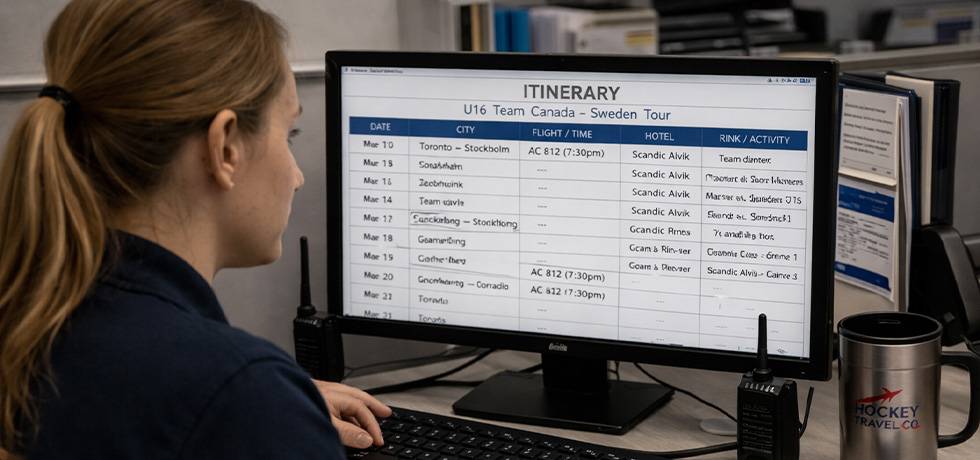
At the core of any hockey travel company is its operations team, which typically begins planning months in advance. Schedules are built around tournament dates, league showcases or exhibition tours, with travel routes mapped to minimize costs and fatigue.
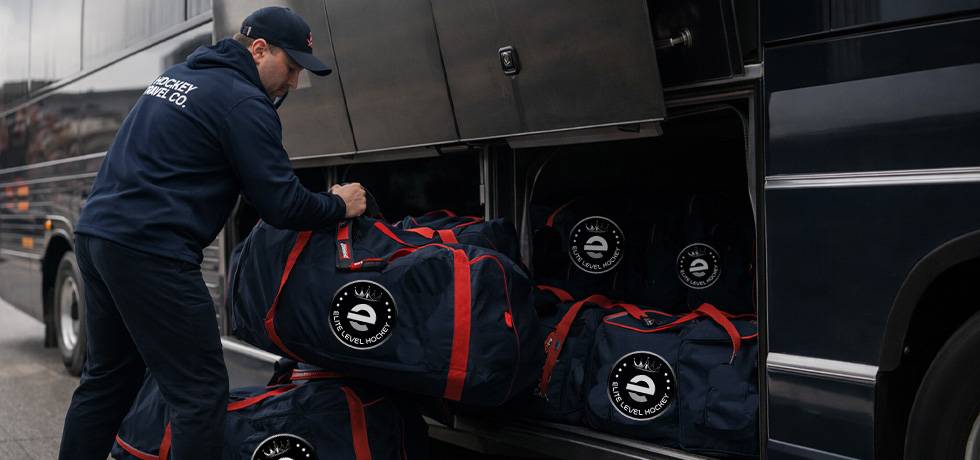
Flights are often booked in blocks, while ground transportation usually charter buses must account for equipment needs. Hockey teams travel heavy, carrying bags, sticks and goalie gear that can complicate standard airline logistics.
“It’s more complex than booking trips,” said Moore, whose company specializes in Europe-based trips. “We’re organizing an entire team’s travel from start to finish. “Equipment is one of the biggest challenges — you’re not just checking bags, you’re coordinating oversized gear, making sure it clears on time and arrives with the team.”
Hotels are another key piece. Companies negotiate group rates and ensure accommodations are close to arenas, while also considering team needs such as meeting rooms, meal plans and recovery spaces.
Despite careful planning, disruptions are common. Weather delays, flight cancellations and schedule changes can quickly derail an itinerary.
To manage that risk, many companies operate 24/7 support lines during trips, allowing staff to rebook travel, adjust schedules or communicate updates in real time. Companies such as Moore’s send at least one representative with every tour and they are often joined by a local expert in Europe to help with translation and other issues that may arise.
Insurance, liability waivers and travel documentation also fall under operations, particularly for international trips where visas and border requirements can vary.
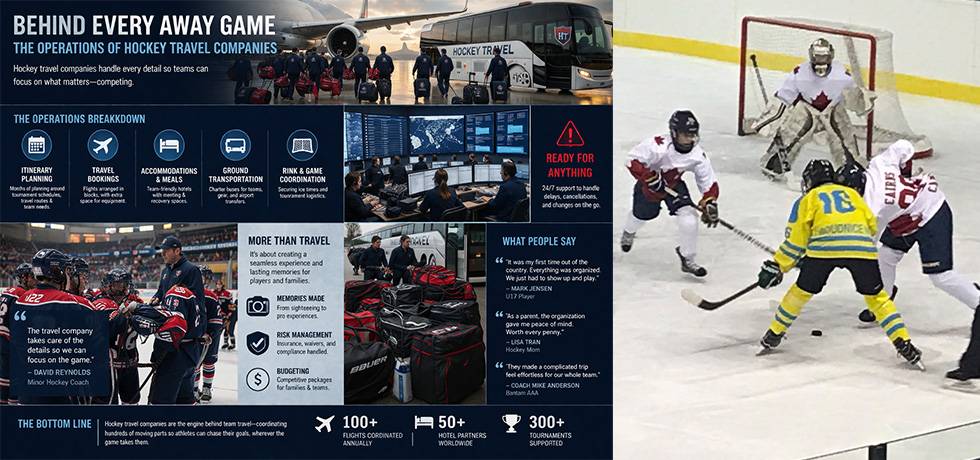
Hockey travel companies must also balance affordability with experience. Families often bear the cost of travel, especially at the youth level, making budgeting a key concern.
Packages are typically built to include transportation, lodging and tournament entry fees, with optional add-ons such as sightseeing excursions or professional game tickets.
“We know these experiences matter,” Moore said. “For a lot of players, it’s their first time travelling like this
“It was my first time leaving the country,” said Mark Jensen, a 17-year-old player from Ontario who travelled to a tournament in Sweden. “Everything was handled for us, so we could just focus on hockey. It made the whole experience stress-free.”
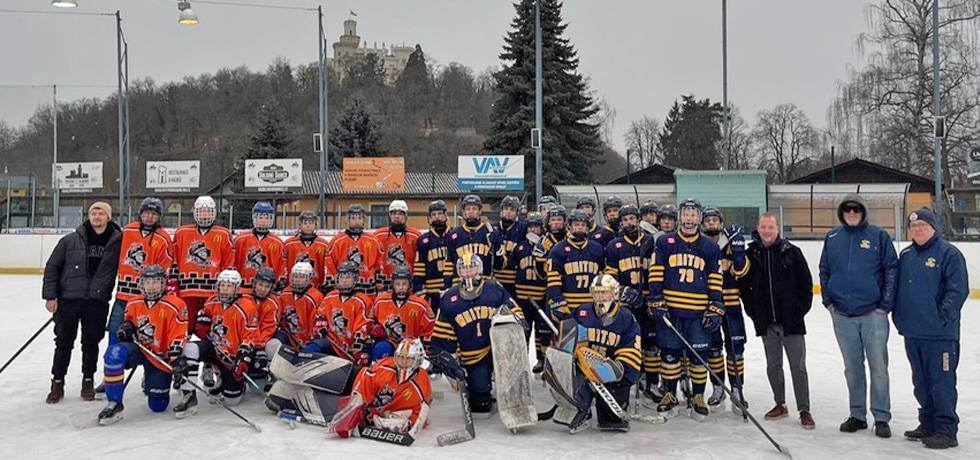
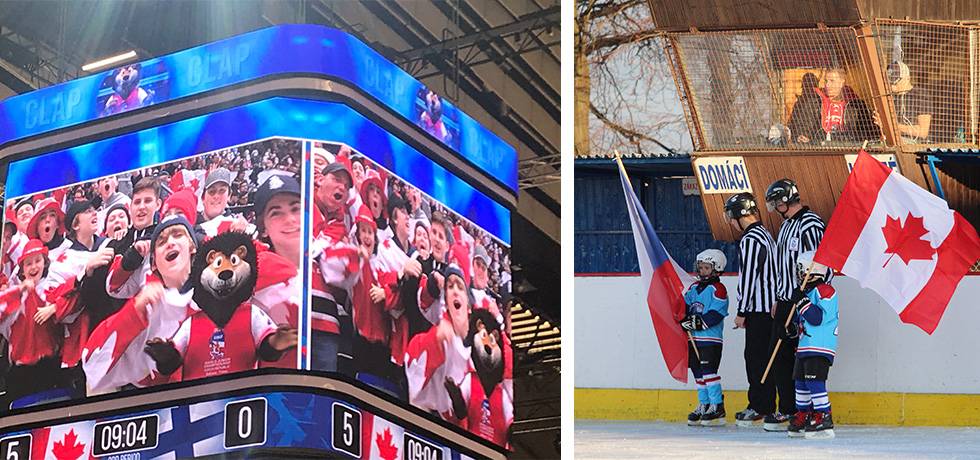
Parents say the organization behind the scenes is what makes the trips worthwhile.
“Our family has gone on two different tours with Moore’s and both have been fantastic!,” said Dave Ashton, whose family went on European tours in 2020 and 2026. “The first one included watching the World Juniors tournament, which I didn’t think could be topped, but my younger son’s trip was just as good. We can’t say enough good things about how organized and efficient Moore’s was during these tours. The people that travel with you go above and beyond!”
As hockey continues to expand globally, travel companies have seen increased demand for international competition. Teams from Canada and the United States frequently travel to Europe for tournaments, while European clubs make return trips to North America.
The growth has pushed companies to build stronger partnerships with airlines, hotels and event organizers, creating a network that supports large-scale travel year-round.
“It’s not just about getting from point A to point B anymore,” the manager said. “It’s about creating a seamless experience in a sport that’s constantly on the move.”
For players and coaches, much of that work goes unnoticed. But without it, the game wouldn’t get very far.