
What Minor Hockey Families Need to Know
Minor hockey players, coaches and parents may notice a few differences when they get back on the ice this season.
Hockey Canada has updated a number of its Playing Rules for the 2026-27 season, with changes affecting penalties, stoppages in play and goaltender safety.
Some of the changes are technical and primarily affect officials, but others will be noticeable from the bench and stands.
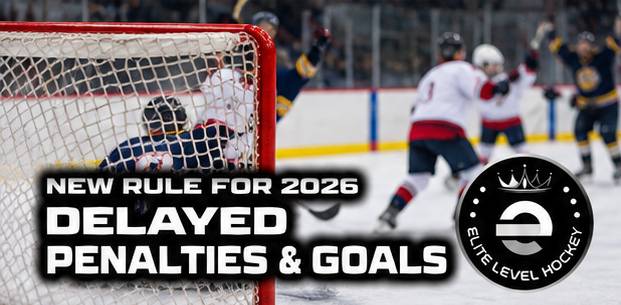
Scoring a Goal Can Now Affect a Delayed Penalty
One of the more significant changes involves what happens when a goal is scored while the defending team is shorthanded or is about to become shorthanded because of a delayed Minor or Bench Minor penalty.
Officials will consider two questions: Was the team that allowed the goal shorthanded, or about to become shorthanded? And was that situation the result of a Minor or Bench Minor penalty?
If both conditions apply, the penalty with the least amount of time remaining ends. Penalty-shot goals are excluded from this rule.
The change means delayed minor penalties can now play a greater role in determining which penalty is terminated following a goal.
There is also a terminology change involving multiple penalties. Only two players from the same team can serve time penalties simultaneously, and a team cannot be reduced below three skaters and a goaltender. A third penalty in this situation will now be referred to as a “deferred” penalty rather than a “delayed” penalty.
Tripping and Slew-Footing Signals Will Look Different
Players and parents may also notice changes in the way officials signal certain penalties.
Officials have been given more specific direction for the arm motions used to distinguish between tripping and slew-footing. The tripping signal moves from front to back, while the slew-footing signal moves from back to front.
The penalties themselves will be familiar, but the updated signals are intended to make the calls easier to distinguish.
No Line Change After Dislodging the Net in U18 AAA
There is also a change specifically affecting U18 AAA.
If a defending team accidentally dislodges its net and causes a stoppage, that team will not be allowed to make a line change.
The intent is to prevent the defending team from benefiting from the stoppage.
Icing Signal Gets an Update
The way officials signal icing is also changing.
When icing is called, the official who stops play with the whistle will now raise their non-whistle arm.
It is a relatively minor change for players and families, but it is one of several updated officiating mechanics they may notice this season.
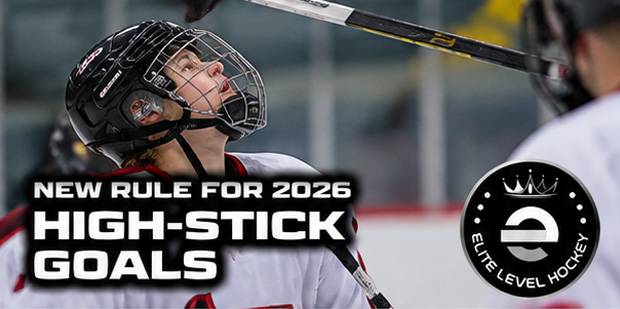
High-Stick Goals Clarified
Hockey Canada has also clarified how officials determine whether a goal involving a possible high stick by an attacking player should count.
The important measurement is the point where the puck makes contact with the stick compared with the height of the crossbar.
If the puck contacts the attacking player’s stick below the crossbar and travels directly into the net, the goal may be allowed.
New Consequences for Refusing to Resume Play
The updated rules also address situations in which a team refuses to start or resume a game.
Teams, players and team officials cannot independently decide to suspend or end a game, and the Head Coach is responsible for the actions of the team.
Depending on the circumstances, penalties can include a Bench Minor, a Penalty Shot during the final two minutes or overtime, a Game Misconduct for the Head Coach and potentially a forfeiture if the team does not resume play.
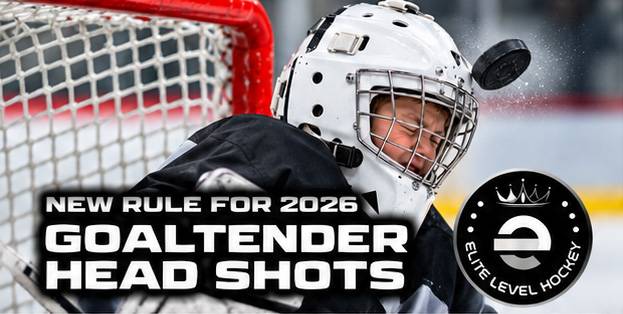
More Protection for Young Goaltenders
One of the most noticeable safety changes affects goaltenders at U13 and below.
If a goaltender is struck in the head by the puck, officials will stop play as soon as it is safe to do so, unless the puck deflects directly into the net.
For the purposes of the rule, head contact means the goaltender’s mask or helmet. It does not include a throat protector attached to the mask.
The change provides additional protection for younger goaltenders following a puck to the head.
Coaches Get Another Option When a Goalie Goes to the Bench
There is another change involving goaltenders during stoppages.
When a goaltender leaves the crease and goes to the Players’ Bench during a stoppage, teams have several options under the rules.
Those can include replacing the goaltender, keeping the goaltender in the game and accepting a Minor penalty, playing with six players or, as a new option where permitted, using the team’s timeout.
What Does It Mean for Minor Hockey Families?
Most players won’t need to memorize a new rulebook before stepping onto the ice.
But understanding the major changes should make some of the calls they see this season easier to understand.
For players, one of the simplest messages remains the same: keep playing until the whistle.
For coaches, understanding the updated penalty situations and goaltender options will be particularly important.
And for parents watching from the stands, some calls and referee signals may look different this season because officials are applying the updated Hockey Canada rules.